Cool Air, Awkward Windows: A Renter's Guide to Portable Aircon in 2026
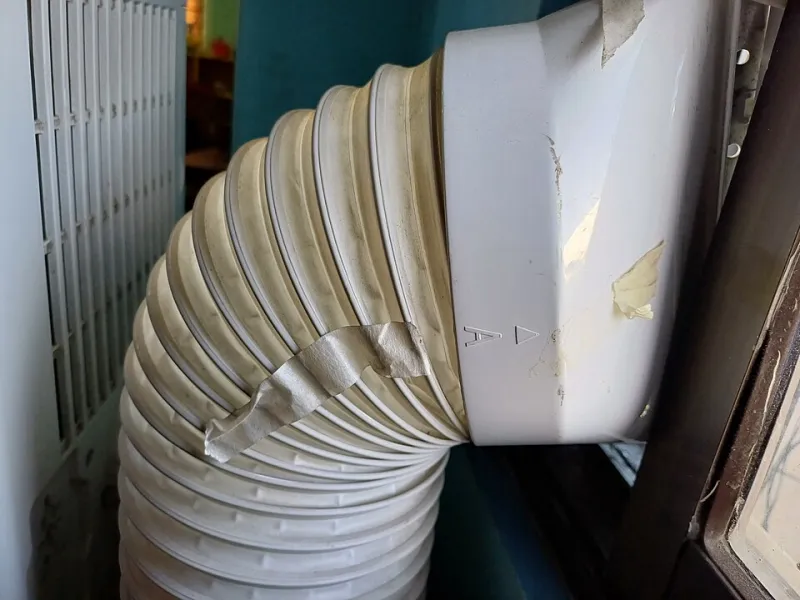
Photo: Curpharar, CC BY-SA 4.0, via Wikimedia Commons
Portable air conditioners have a brilliant sales pitch: no installer, no outdoor unit, no landlord paperwork. Just wheel it in, stick the hose out of a window and enjoy a cool living room. In a UK flat, that pitch often runs into a sash window, a listed facade, a nosy neighbour and an electricity bill that arrives later like a polite but firm letter.
That does not make portable aircon useless. It makes it a compromise. In 2026, with more units sold through general retailers and marketplace listings, the useful question is not 'does it cool?' but 'will it cool my room enough to justify the noise, space and cost?' Here is the practical version.
What a plug-in unit can actually do
A portable air conditioner is a real refrigeration system on wheels. It takes heat out of the room and dumps it through a flexible hose. That is why the back of the unit blows warm air and why the hose needs somewhere to go. It is not a fancy fan, and it is not an evaporative cooler, despite what some product photos suggest.
Most single-hose models pull some cooled air from the room and use it to carry heat outside. That creates a slight negative pressure, which can pull warm air back in through gaps. Dual-hose models are better at avoiding this, but they are bulkier, pricier and still need a decent window seal. Neither type will cool a whole flat through open doorways. Think one room, doors shut, blinds down, and realistic expectations.
Sizing claims deserve suspicion. A listing may say 'cools up to 30 square metres', but that figure assumes insulation, ceiling height, sun exposure and occupancy that may not match your flat. A top-floor south-facing rental with single glazing is a different job from a shaded ground-floor bedroom. Use the manufacturer's figure as a starting point, then subtract optimism.
The window kit is the whole ball game
The hose is only half the story. The other half is the plastic window plate and the gap around it. If warm outside air can wander back in beside the hose, the unit is fighting itself. In a UK flat, that gap is often the weakest part of the setup.
Sash windows can be sealed with a fabric or plastic kit, but the fit is rarely elegant. Casement windows that open outwards can be trickier, especially if the frame is deep or the hinge is awkward. Tilt-and-turn windows may need a purpose-made panel. Renters should avoid drilling, screwing or permanently altering frames. A tension-fit seal or a removable panel is safer, but check your tenancy agreement before you start taping anything to the paintwork.
Also think about trickle vents. Blocking ventilation to make the window kit fit can push damp and stale air problems into the room. You want a seal around the hose, not a sealed bedroom with no fresh air at all. In older flats, condensation and mould are already a risk; portable aircon should not make that worse.
Noise, vibration and the neighbour question
Portable units are noisy because the compressor and fan are in the same box as the room you are cooling. Manufacturer decibel figures can be measured in ways that flatter the product. A unit that sounds acceptable in a showroom may be a different beast at 11pm in a small bedroom.
If you are buying for sleep, look for a model with a genuinely low night mode and read owner reviews for compressor cycling, rattles and fan whine. Put the unit on a solid surface, not a wobbly shelf, and leave space around the vents. Vibration can travel through floors in converted terraces and modern blocks alike. If you live above someone, a cheap anti-vibration mat may be a better investment than an extra fancy display panel.
Check any building rules too. Some leases and management companies restrict external hoses, balcony units or overnight noise. A portable aircon unit is not usually a fixture, but that does not mean your neighbour will enjoy the hum through the floorboards.
Running costs: the number the box skips
Cooling costs money, and portable aircon is not the most efficient way to do it. A typical unit may draw somewhere between 700W and 1,200W while the compressor is running. If it draws 900W for four hours, that is 3.6 kWh. Multiply that by your electricity rate and you have the daily cost. Add standby draw, and add more if you run it every evening during a hot spell.
Use a smart plug with energy monitoring if you want real numbers rather than guesswork. Also compare the unit's energy label and cooling capacity, not just the headline BTU figure. A slightly more efficient model can cost more upfront but be less painful across a summer. And remember that shade, curtains, window film and a decent fan can reduce how hard the aircon has to work. Cooling one room is a system, not a single box.
Refrigerant rules and the label under the plug
Portable aircon contains refrigerant, and some newer units use flammable refrigerants such as R290. That is not automatically a problem, but it does mean you should read the manual and follow the safety instructions. Do not puncture the sealed system, do not attempt a DIY recharge, and do not ignore warning labels. In the UK, refrigerant handling and disposal are regulated, so a broken unit should go through proper recycling rather than the bin store.
Check for UKCA marking, a clear warranty and a UK-based returns process. Marketplace listings can be vague about who is responsible if the unit arrives damaged or develops a fault. A cheap import may save £50 today and cost you far more in hassle later.
A renter's pre-checkout checklist
Before you buy, measure the window opening, the hose diameter and the floor space the unit will occupy. Confirm you can seal the window without permanent changes. Check the weight; these things are not fun to carry up a narrow stairwell. Look for a drain option, because some units collect water and need emptying. Read the noise reviews, not just the star rating. Check the return window. And ask yourself honestly whether you need to cool one room for a few weeks, or whether a fan, better shading and a review of your sleep setup would do more for less.
The honest bottom line
A portable air conditioner can take the edge off a hot UK flat, especially if you seal the window properly and accept that it is a one-room appliance. It will not turn a stuffy top-floor rental into a cool hotel suite, and it will add to your electricity bill. Buy it as a targeted tool, not a miracle. In 2026, the best purchase is the one that matches your window, your wiring and your willingness to listen to a compressor hum while you watch telly.