When the Cloud Moves In Down the Road: Reading a Data Centre Planning File Like a Local
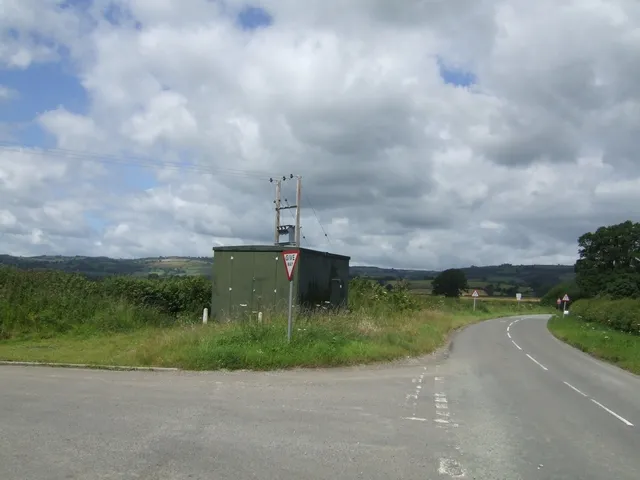
Photo: John M, CC BY-SA 2.0, via Wikimedia Commons
As of November 2026, the most important technology story in many UK towns is not a product launch. It is a planning notice pinned to a parish council website.
A developer wants to build a data centre on the edge of town. The documents talk about AI-ready capacity, renewable energy and local jobs. The locals talk about the substation, the water main, the generator testing and the view from the footpath. Both sides are talking about the same thing: the physical cost of keeping the cloud running.
The planning notice is the new product launch
For years, data centres felt abstract. They sat in business parks, industrial estates and the kind of places you only notice from a train window. AI has changed the scale and the speed. Racks are denser, cooling loads are higher and the electricity demand can look more like a small industrial site than a warehouse with extra servers.
That is why proposals are turning up in places that never saw themselves as tech hubs. A field outside a market town. A former airfield. Land beside a motorway junction. The pitch is familiar: modest permanent employment, construction work, business rates and a bit of fibre infrastructure. The catch is equally familiar: heavy power demand, water use, noise from cooling plant, standby generators and new pylons or substations on the horizon.
What councils are actually being asked to approve
A data centre planning application is not one decision. It is a pile of them. Councillors may be asked to approve access roads, security fencing, landscaping bunds, cooling equipment, backup generators, drainage and the electricity connection that makes the whole thing work. Some applications arrive as outline permission with details to follow later. That is where local attention matters most, because the big principle gets agreed before the noisy details are settled.
The language can be dull, but the numbers are not. Look for the stated power capacity in megawatts, not just the floor area. Look for the connection date and whether the site needs a new substation. Look for the generator tests and how often they are expected to run. Look for the water source and the cooling method. Look for what happens to waste heat, if anything. And look for the conditions attached to the permission, because a promise in a brochure is not the same as a condition in a decision notice.
The grid queue is the real gatekeeper
AI's power hunger has made electricity capacity the binding constraint. In parts of the UK, the question is not whether a developer can find land. It is whether the local grid can take the load, and when. A data centre can sit in a queue for a connection while the network operator works out what reinforcement is needed. That can mean new cables, new substations or upgrades further up the system.
This is where the local story becomes a national one. Large users can secure connection offers that shape where capacity is available. Households and smaller businesses may see the knock-on effects through network charges, construction disruption and the pace of local upgrades. It is not as simple as one data centre adding a line to your bill, but the infrastructure squeeze is real. The fair question is who pays for reinforcement, who benefits from it and how transparent the process is.
Water, cooling and the promises that need checking
Cooling is the part of the data centre debate that often gets reduced to a slogan. Older designs used a lot of water. Newer ones can be more efficient, but efficiency depends on the design, the climate and the workload. A closed-loop system may use less water than evaporative cooling, but it still needs power. Air cooling may suit some sites and not others. Heat reuse sounds brilliant, but it needs a customer for the heat and a pipe network to get it there.
For UK towns, the practical questions are straightforward. How much water will the site take from the local supply? What happens in a drought? Will the cooling plant be audible at the nearest houses? How will standby generators be tested, and how often? These are not anti-technology questions. They are the same questions you would ask about any large industrial user moving into the neighbourhood.
Rates, jobs and the local bargain
Data centres do generate business rates, and in some areas that is a meaningful part of the pitch. But the employment numbers are usually modest once construction ends. The local bargain therefore needs to be more than a headline about jobs. It might include community funding, improved footpaths, fibre routes, skills programmes or support for local energy projects. The details matter, and so does the mechanism. A voluntary promise is weaker than a planning condition or a legal agreement.
There is also the landscape question. A data centre is not just a building. It can bring lighting, fencing, access roads, cooling towers, generator compounds and new electricity infrastructure. Some sites will be well screened. Others will change the view from a much-loved walk. That is a legitimate planning concern, not a aesthetic nitpick.
Your broadband is not automatically the winner
The fibre going into a data centre is not the same as fibre going into your home. A new site can improve local digital infrastructure indirectly, especially if it encourages network builders to lay more capacity along the route. But it can also be built with dedicated connections that do very little for the street outside. If a developer promises local connectivity, ask what that means in practice: which premises, which speeds, which timeline and who pays for the final connection.
The same goes for the broader claim that AI infrastructure is good for the local economy. It might be. It might also be a highly automated facility with a small permanent workforce and a large appetite for power. Both things can be true. The useful question is what the town gets in return for hosting the load.
A checklist for the next parish meeting
When the next application lands, ignore the glossy renders for a moment and read the technical documents. Find the megawatts. Find the water use. Find the generator schedule. Find the connection date. Find the conditions. Find out whether the site is designed for AI workloads or general cloud storage, because that changes the power and cooling profile. Ask what happens if the site is expanded later, and ask what decommissioning would look like.
None of this means every data centre is a bad neighbour. The UK needs digital infrastructure, and AI is not going to run on good intentions alone. But the cloud has to land somewhere. When it lands down the road, the least a town can expect is a straight answer about the power, the water, the noise and the money. The planning file is where those answers live. It is worth learning to read it.