Silent Devices: A UK Checklist for the 2G and 3G Shutdown
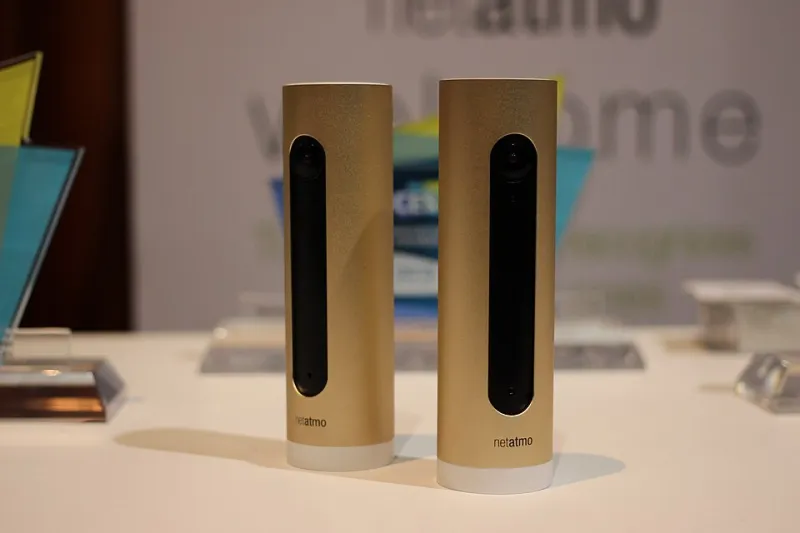
Photo: Maurizio Pesce from Milan, Italia, CC BY 2.0, via Wikimedia Commons
The smart meter is not a phone. It doesn't ring, it doesn't buzz with notifications, and most of us forget it exists until the in-home display starts nagging about the tumble dryer again. But behind the scenes it is very much a connected device — and a fair few of them are still chatting to the outside world over mobile networks that are being dismantled, bolt by bolt.
That's the awkward bit of the great 2G and 3G switch-off. Phones upgrade every two or three years. Alarm panels, meters and car telematics modules are expected to last fifteen. The networks and the gadgets are on completely different clocks, and you're the one holding the bill when they disagree.
What's actually being turned off
Start with the distinction most coverage skips: 2G and 3G are not the same problem.
3G is, for practical purposes, already history. The UK's operators ran a rolling retirement through 2023 and 2024, and the last 3G sites have been powered down. If you were still leaning on a 3G dongle or an early connected car, you've probably noticed by now.
2G is the slower, messier exit. It's still on air, still carrying voice in a few rural patches, and — far more importantly — still carrying a huge volume of machine traffic. Shutdown dates have been announced and revised more than once, and the sensible assumption in 2026 is that 2G disappears before the end of the decade, possibly sooner than the devices in your hallway are expecting.
Regulators have framed all this as progress, and broadly it is: the old spectrum gets recycled for 4G and 5G, and everyone gets faster data out of it. The catch is the long tail of hardware that was designed to be cheap, low-power and forgettable.
Why the long tail is so long
Three reasons, and none of them are anyone's fault in particular.
Cost. A 2G radio module is pennies. A 4G one, with the certification and power budget that goes with it, is not. Manufacturers built to a price for a market that expected a meter to last a decade and a half.
Coverage quirks. 2G is genuinely good at the one job these devices need. It's narrow, it's low-power, and it historically reached into basements, meter cupboards and the back of a Scottish glen in ways that 4G struggled with.
Nobody replaces what's working. A burglar alarm that has never false-alarmed is not something you volunteer to rip out and replace. Which is exactly how you end up with a fifteen-year-old panel on a network with a two-year horizon.
The three devices most likely to bite you
The smart meter
Most smart meters talk to their supplier over a wide area network run through the national smart metering infrastructure, and a chunk of that fleet went out on 2G or 3G radios. The industry has been migrating comms hubs to 4G for a while, and in northern England and Scotland many meters use a long-range radio system rather than cellular at all.
That's the reassuring version. The less reassuring version is what happens if yours gets missed: nothing explodes, nothing bleeps. Your meter simply stops reporting, your bills get estimated, and any time-of-use tariff you signed up to quietly stops being accurate. If you want to check, ask your supplier directly whether your comms hub is 4G — and don't take 'it's smart' as an answer.
The alarm and the telecare pendant
This is the one that actually matters. Monitored alarms signal to an alarm receiving centre, and a lot of older panels do it over a mobile radio. Telecare pendants — the ones used by older or vulnerable relatives — often ride the same rails.
Worth separating out: the separate switch from analogue phone lines to digital voice is a related headache, and dual-path alarms that use both a landline and a SIM can be caught by either change. The practical test is not 'does the siren sound?' but 'does a signal actually arrive at the monitoring centre?' Ask the provider to run a live test and confirm it in writing.
The car
Modern cars carry an embedded SIM for emergency calling, remote locking, preconditioning, stolen vehicle tracking and insurer telematics. Early generations of that hardware were 3G-only. When the network goes, the features don't degrade gracefully — they just stop, and the manufacturer's answer is usually that the module isn't upgradable.
Before you buy used, check the connected services status of anything more than about six years old. It's the sort of thing that's invisible on a forecourt and very visible when your tracking subscription quietly lapses.
Where the reassurance is fair — and where it's thin
The fair bit: energy suppliers have obligations around keeping smart meters functioning, there is a funded national programme migrating comms, alarm manufacturers have largely moved to 4G with dual-SIM fallback, and most car makers now publish end-of-support dates for connected services.
The thin bit is that almost none of this arrives at your door. There's no letter, no flashing light, no universal register you can check your postcode against. Responsibility for noticing sits with the person who owns the gadget, and the person who owns the gadget has never once thought about its radio.
It gets thinner in the second-hand and rental markets. A landlord-installed alarm, a hand-me-down telecare pendant, a used car imported from a market where the module was specced differently — those are the cases that fall between everyone's remit.
Your weekend checklist
- Dig out the manuals. Look for 2G, 3G, GSM, UMTS or GPRS in the spec sheet. Any of those is a yellow flag, not necessarily a red one.
- Check the smart meter. Ask your supplier what network your comms hub uses and whether an upgrade is scheduled. Get a date.
- Test the alarm properly. Ring the monitoring centre, not the siren. Ask them when the panel last sent a successful signal.
- Interrogate the car. Manufacturer app or dealer, connected services status, and what happens to each feature when the contract lapses.
- Sweep for stragglers. Telematics dongles, boiler monitors, EV charge points, doorbell cameras on cellular, anything with a SIM you'd forgotten about.
- Write the dates down. A diary note six months before a known shutdown is worth more than any amount of good intentions.
If you find one
Ask three questions in this order: is this device on a network that's being retired; can it be upgraded rather than replaced; and who pays? For meters, that's usually the supplier. For alarms, often the installer, sometimes at your cost. For cars, frequently nobody, which is the honest answer even when it's an unhelpful one.
None of this is a reason to panic. The vast majority of kit will be migrated, replaced or simply retired without drama. But 'the industry is handling it' and 'your specific meter cupboard is handled' are two different sentences, and only one of them is worth trusting without a check.