The Software Sunset Clause: Buying Smart Home Kit That Survives a Vanished Brand

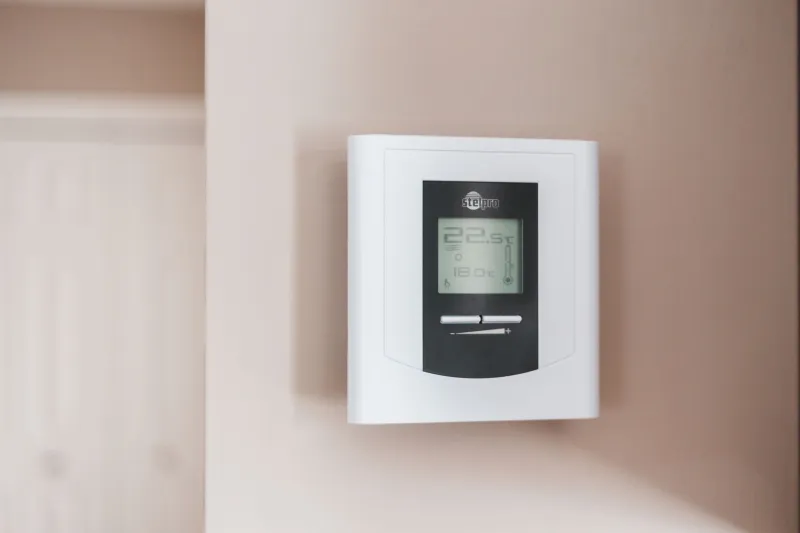
Photo: Dsrana1, CC0, via Wikimedia Commons
There is a particular kind of quiet in a smart home when the app stops working. The hardware is still there — the plug still has a little blue light, the thermostat still has a screen — but the bit that made it smart has vanished into a server somewhere. No warning email. No replacement. Just a device that has been demoted to a dumb one, and a sinking feeling that you paid a premium for the privilege.
This is the app orphanage: the growing pile of connected gadgets whose companion app, cloud account or firmware update channel has been shut down by a manufacturer that moved on, got bought, or simply ran out of money. It is not a niche problem. As the smart home market matures, the gap between how long a device lasts physically and how long its software is supported has become one of the most important — and least discussed — buying decisions in UK tech.
The quiet death of a gadget
A smart device is rarely one product. It is at least three: the hardware in your hand, the app on your phone and the cloud service in the middle. When any one of those disappears, the experience usually falls apart. Sometimes the app is pulled from the App Store and Google Play, leaving new phones unable to set the device up. Sometimes the cloud login stops working, so remote control dies even though the device is still on your Wi-Fi. Sometimes the manufacturer promises local control but never quite ships it.
The frustrating part is that none of this shows up on the box. A shiny smart radiator valve and a boring mechanical one can look equally well made in a shop. The difference is what happens in year four, when the brand has been absorbed into a larger group and the app has not been updated since the last big phone OS release.
What 'smart' actually depends on
Before you can judge whether a gadget will survive, it helps to know what it leans on. Most app-dependent devices fall into one of three camps.
Cloud-first devices do the thinking on a remote server. The app talks to that server, and the server talks to your gadget. This can be smooth, fast and feature-rich, but it also means the manufacturer holds the keys. If the service goes, your device may keep running its last schedule, or it may not.
Local-first devices keep the core controls on your home network. You might still use an app, but the app talks directly to the gadget. Some can be set up and controlled without an internet connection at all. These are the ones that tend to survive a brand exit, because there is no remote switch to flip.
Hybrid devices promise the best of both, with local control for the basics and cloud features for extras. The catch is that 'local control' can mean different things. Sometimes it is a genuine offline mode. Sometimes it is a local bridge that still needs the mothership to authenticate you. Read the small print, or better still, look for verified support for a standard such as Matter or Thread, which is designed to let devices work across different ecosystems rather than one company's app.
Designs that survive a manufacturer exit
There is no guaranteed immortality in consumer tech, but some designs are clearly more resilient than others. The first clue is whether the gadget has useful physical controls. A smart thermostat with physical buttons and a local schedule is less likely to become a brick than one that insists on an app for every adjustment. A smart plug with a manual override button is more useful than one that can only be toggled from a phone.
The second clue is standards. Devices that speak Matter, Thread, Zigbee or Z-Wave through a hub are not automatically safe, but they are less likely to be stranded because they can often be controlled by a third-party hub or home assistant software. The key word is often. A manufacturer can still lock down features, and a hub can still be discontinued. But a device that exposes its basic functions to an open standard has a better chance of being adopted by something else.
A third clue is whether the device needs an account. If you can set it up, schedule it and control it without handing over an email address, that is a good sign. It is not a guarantee — some local devices still need an app for initial setup — but it removes one dependency that can disappear.
Finally, look for signs of software maturity. Does the manufacturer publish a support timeline? Does it have a track record of firmware updates that fix security issues? Does it document an API or local control option? These are boring questions, but they are the ones that separate a long-term purchase from a three-year rental.
What UK law does and does not promise
Here is where expectations often run ahead of reality. The Consumer Rights Act 2015 gives you strong rights when goods are faulty, not as described or not fit for purpose. If a smart gadget stops working because of a hardware fault within its expected lifespan, you have a route to a repair, replacement or refund from the retailer. That is worth knowing, and it is worth keeping your receipt.
But the Act is not a software update guarantee. A manufacturer shutting down an app or cloud service is not automatically a fault in the same way a broken screen is. The legal picture is more nuanced: if the product was sold with a promise of ongoing app support, or if the lack of support makes the device unusable for its advertised purpose, you may have a case. In practice, many buyers find themselves relying on the retailer's goodwill, a manufacturer's voluntary warranty or a chargeback through their card provider.
Extended warranties are a mixed bag. Some cover hardware failure but explicitly exclude software and services. Others are little more than insurance against the obvious. Read the terms before you pay extra, and remember that your statutory rights sit alongside any warranty — they do not replace them.
Questions to ask before you add another app
If you are standing in a shop or scrolling a product page, a few blunt questions will tell you more than most spec sheets.
Can it work without the cloud? Look for local control, offline schedules and physical buttons. If every function depends on a remote server, you are buying a subscription-free service that might not stay free — or stay at all.
Does it support a standard? Matter, Thread, Zigbee and Z-Wave are not magic words, but they are a better bet than a proprietary protocol with one app. Check whether the standard covers the features you actually use, not just basic on and off.
What is the support timeline? A manufacturer that publishes a security update policy is more trustworthy than one that does not. If you cannot find any information, assume the worst.
Does it need an account? Fewer accounts mean fewer points of failure. If an account is required, check whether you can export your data and whether the device still works if the account system changes.
Is there a manual override? For anything that matters — heating, lighting, doorbells, alarms — you want a way to use it when the app is down. A gadget that cannot be operated without a phone is a gadget that has borrowed your phone as a hostage.
The keep-it-dumb rule
The smart home is not going away, and nor should it. The convenience is real, and the best devices genuinely make life easier. But the app orphanage is a reminder that convenience has a lifespan, and it is often shorter than the hardware. The safest approach is not to avoid smart gadgets altogether, but to buy the ones that can still be useful when the app is gone. If a device is only smart because of an app, treat it as a rental. If it is smart because of what it can do on your own network, you are closer to owning it.
And if you are already nursing a gadget through its orphan years, check whether it has a local mode, a third-party integration or a community workaround. Sometimes the afterlife is better than the obituary. Sometimes it is just a plug that clicks and a phone that no longer cares.