The Balcony Panel Maths: What a Plug-In Solar Kit Can Actually Do for a UK Flat
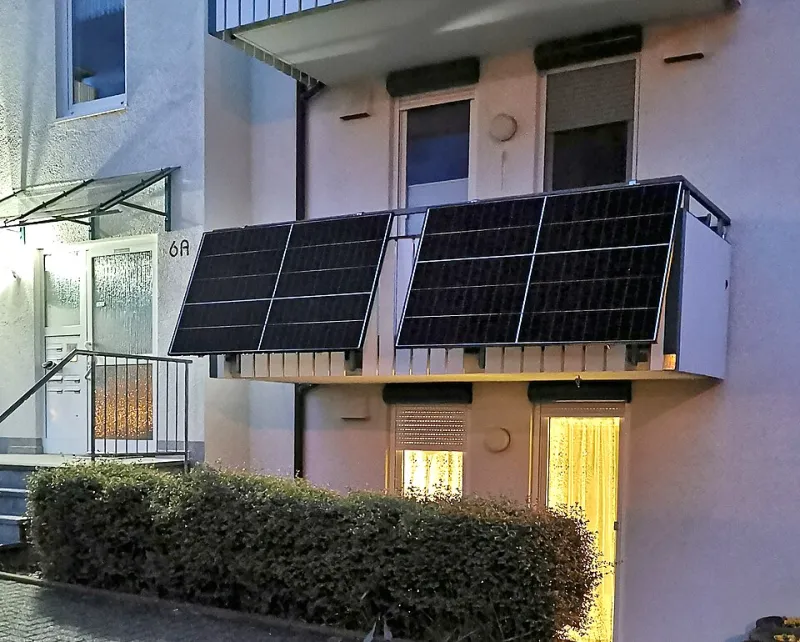
Photo: Triplec85, CC BY-SA 4.0, via Wikimedia Commons
A 400W solar panel leaning against a balcony rail looks like household energy common sense. The sun is free, the kit is advertised as plug-in, and your electricity bill is doing that thing where it arrives like a mild threat. But a UK flat is a awkward place to make solar maths work. Between vertical mounting, winter gloom, metering quirks and the small matter of permission, the gap between the sales page and the actual ledger can be wide.
None of that makes plug-in solar pointless. It just means you should treat it like a small, specific purchase rather than a rooftop power station that happens to come in a box.
First, 'plug-in' is doing a lot of lifting
In some countries, balcony solar kits are a mainstream retail product with a fairly settled rulebook. The UK is not quite there. As of 2026, the picture is still patchy: you may need to notify your distribution network operator, you should involve a competent electrician, and your landlord, managing agent, insurer and leasehold terms all get a say before anything goes near a shared building.
That does not mean every kit is banned or that you need a full scaffolding crew. It does mean the fantasy of unboxing a panel and shoving a plug into the kitchen socket is not a safe buying guide. The inverter, cabling, earthing and connection method matter. So does the question of who signs off the installation. If a retailer cannot answer those points clearly, that is your first red flag.
The maths: nameplate watts are not kilowatt-hours
A panel rated at 400W is not a 400W appliance. That figure is a peak under standard test conditions, not a promise for a cloudy Tuesday in Manchester. What you actually get is kilowatt-hours over time, and in the UK a well-sited, optimally tilted solar setup might produce somewhere around 850–1,000 kWh per installed kilowatt-peak each year.
So a single 400W panel, in ideal roof-like conditions, is roughly a 0.4 kWp system. That points to something like 340–400 kWh a year. A balcony panel is rarely ideal. It is often vertical, partly shaded, behind glass or angled away from the sun. A more realistic range for a decent south-facing flat setup might be 40–65% of that ideal, or roughly 140–260 kWh a year.
At a round 25p per kWh, that is about £35–£65 a year of avoided import, assuming you use the power when it is generated. Two panels might double the output, but only if you have the space, the mounting and the permission. The maths gets less exciting once you add brackets, a qualified check and the risk of buying the wrong inverter.
Winter is the reality check
Solar in the UK is seasonal. December and January are not kind. A 400W balcony panel that looks lively in May might manage only a few kilowatt-hours a week in midwinter, and some days will produce almost nothing useful. Think in terms of small daily top-ups: enough to take the edge off a laptop, router and a few LED lights, not enough to run an electric heater or a heat pump.
This matters because plug-in solar marketing often leads with summer snapshots. A better test is to ask what the kit will do in February, on a grey day, at 2pm. If the answer is vague, assume the winter contribution is modest. A kettle boil is roughly 0.1–0.15 kWh, so a winter day's output might cover a couple of brews and not much else.
Aspect, shade and the flat dweller's handicap
South-facing is best. East and west can still work, but the daily curve shifts earlier or later. North-facing is usually a non-starter. Shade is the quiet killer: railings, neighbouring blocks, trees, satellite dishes and even the panel's own mounting frame can drag output down. Bypass diodes and microinverters help with some shading patterns, but they do not turn a gloomy balcony into a solar farm.
Glass is another compromise. A panel behind a closed window is working through a filter, and the angle is usually wrong. Clamping a panel outside the rail is better for light but worse for wind loading, weight and neighbour relations. Suction cups and temporary straps should make you nervous on anything above the ground floor.
Where the electrons actually go
Self-consumption is the whole game. A plug-in kit saves you money mainly by reducing the power you pull from the grid while the sun is out. If you generate at midday and nobody is home, the value drops unless you have a battery, a smart diverter or appliances timed to run then.
Export is where expectations need managing. DIY plug-in kits are not a simple route to export payments, and schemes like the Smart Export Guarantee generally expect certified installation and the right paperwork. Older meters should not be relied on to spin backwards. Smart meters record import and export separately, but that does not mean your supplier will pay for a balcony panel's surplus. Ask your supplier and your DNO before assuming anything.
The renter's question list
Before you buy, get straight answers to these:
- Does my tenancy agreement or lease allow external fixtures, and do I need written permission from the landlord or managing agent?
- Is the balcony structurally suitable, and what does the building's insurance say about panels, wind load and water ingress?
- Does the DNO need notification, and will the kit's inverter comply with the relevant UK connection requirements?
- Who is competent to check the wiring, earthing and RCD protection, and what will that cost?
- What happens to the kit when I move out, and who is responsible for removing brackets and making good?
- What realistic annual yield does the seller expect for my aspect and shading, in kWh rather than adjectives?
The verdict: a small bill trimmer, not a bill killer
A plug-in solar kit can be a satisfying little project for a UK flat with a sunny, permitted balcony and a daytime electricity habit. It can shave a few tens of pounds a year off a bill and teach you a lot about how energy behaves in your home. What it will not do, in most flats, is come close to replacing a normal electricity supply or paying for itself in one winter.
In 2026, the sensible buyer is the one who asks for the winter numbers, the DNO position and the landlord's signature before the panel goes up. Sunlight is free. Clamping it to someone else's building is where the real costs start.