The Charged-by-Lunchtime Promise: A UK Field Guide to Battery and Fast-Charge Claims

Photo: N509FZ, CC BY-SA 4.0, via Wikimedia Commons
There is a particular kind of optimism that comes with a new phone in November. The box says half an hour to 50%, the reviews nod along, and you picture yourself topping up while the kettle boils. Then you actually try it on a chilly Tuesday morning, with the case on, a podcast streaming and the screen waking every few seconds, and the phone behaves less like a flagship and more like a tired commuter.
That gap is not necessarily a con. It is a specification written for a very specific set of conditions, and most of us do not live in those conditions. The useful question is not whether the headline charging time is true. It is what kind of truth it is. Treat battery claims like a weather forecast: helpful, but not something to plan a picnic around without looking out of the window.
Why the headline number lives in a warm room
Most fast-charge figures are produced in controlled lab conditions. That usually means a steady room temperature, a charger and cable from the manufacturer, a screen that is off, and very little happening in the background. The battery may also be at a particular state of health and starting from a carefully managed level. None of that is dishonest, but it is a long way from a UK kitchen in January.
Batteries are chemical things, and chemicals are sensitive to temperature. Cold slows the reactions inside a lithium-ion cell, so charging can be deliberately restricted until the battery warms up. Heat is the opposite problem: if the phone or laptop is already warm from gaming, navigation or a stuffy bag, the system may throttle charging to protect the cell. Your device is not being lazy. It is trying not to age prematurely.
Then there is the 0 to 50% part. The first half of a charge is usually the quickest because the battery can accept more power when it is relatively empty. The last 20% is slower on purpose, and that is why a 0 to 50% claim can look brilliant while a 0 to 100% claim is often left out of the marketing. A phone that hits 50% in half an hour may still take well over an hour to reach full. If you routinely need a full day from a full battery, the headline number tells you less than you think.
What the small print tends to leave out
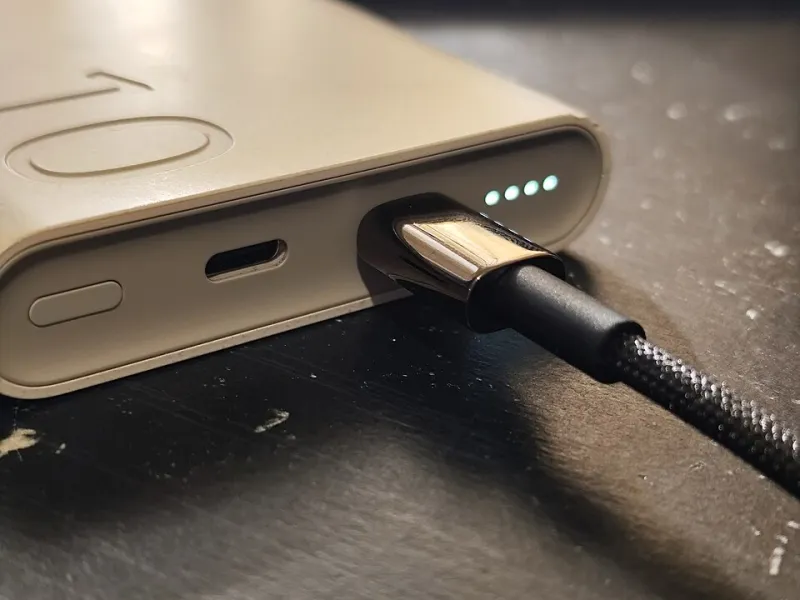
The charger matters. A phone may support 65W charging, but if the box does not include a charger, or if you plug in an old 18W brick from a drawer, you will not see the advertised speed. The cable matters too, especially with USB-C Power Delivery. Some cables are built for data, some for video, and some for higher power. A tired cable with a frayed end is not the moment to discover the difference.
The case matters more than people expect. A thick case can trap heat, and heat can slow charging. Wireless charging adds another layer of loss and warmth. If you charge on a bedside table under a lamp, with a case on, while the phone is syncing photos, you are stacking small inefficiencies until the impressive number becomes a vague memory.
And the background matters. A phone downloading a software update, backing up photos or running navigation is doing real work. So is a laptop with a dozen browser tabs and a video call. The charging system has to share its power budget with the device itself. That is why a laptop can charge slowly while you use it and then speed up when you close the lid. It is also why the best time to judge a charging claim is when you are not asking the device to do three other things at once.
The cold-kitchen test and the train test
You do not need a lab to get a more honest picture. Start with a simple cold-kitchen test. Let the device settle to room temperature, note the battery percentage, plug in the charger that came with it or the one you actually plan to use, and leave the screen off for 30 minutes. Do not babysit it. Then check the percentage. That gives you a rough baseline for your own home, not the manufacturer's.
Now try the train test. This is the one that matters for UK commuters. Use the phone normally on a journey, maybe with maps, music or a ticket app open, and charge from a power bank or seat socket. You will almost certainly see a slower rise than the lab figure, especially if the signal is patchy and the phone is working harder. That is not a failure. It is reality. The same applies to a laptop charged from a USB-C port on a train table: convenient, but not the same as the mains charger at home.
One more practical check: look at the battery health setting if the device has one. A two-year-old phone with worn battery health will not match a review written on a fresh sample. If you are buying second-hand, or handing a device down to a family member, factor that in. A new battery can do more for the experience than a new case.
A short checklist before you tap buy
- Look for the charging claim in context: what percentage, with what charger, and with the screen on or off?
- Check whether a charger is included. If not, price one in that supports the stated standard.
- Read the battery capacity in watt-hours for laptops, not just the marketing language. Bigger batteries usually last longer, but they also take longer to fill.
- Check the cable standard if you are buying separately. USB-C is a shape, not a guarantee of power delivery.
- Search for independent tests that mention heat, cases or real-world use, not just the launch-day figure.
- Decide what you actually need. If you charge overnight and rarely rush, a slower, cooler charge may suit you fine.
The sensible way to read a fast-charge promise
A headline charging time is best read as a best-case scenario, not a promise for every kitchen, train carriage and winter morning. It tells you the device can charge quickly under favourable conditions. It does not tell you how it will behave when the case is on, the room is cold and your bag is full of cables that may or may not support the right standard.
That does not make the claims useless. It makes them a starting point. The UK buyer who gets the most from a battery claim is the one who checks the charger, thinks about the cable, notices the temperature and tests the thing in their own life. The box gives you the headline. Your kitchen gives you the truth.
If a manufacturer will not say how a figure was produced, treat it as a nice round number rather than a buying decision. And if you have already bought the device, do not panic: use the right charger, keep it out of direct heat, take the case off for a fast top-up when you can, and judge it by your own week rather than the side of the box. That is a more useful benchmark than any lab figure, and it is one you can actually repeat.