The Label Under the Plug: A UK Home Audit for Quietly Withdrawn Gadgets
A recall is one of those things most of us assume will find us. An email, maybe a text, perhaps a cheerful note from the retailer. In reality, the gadget most likely to be affected is the one bought from a marketplace seller, given as a gift, picked up second-hand, or plugged in so long ago that the order confirmation is buried somewhere in an old inbox. The notice goes up. The product stays in the house.
That is not a reason to panic. It is a reason to spend five minutes looking at the labels on the things you charge, heat and leave switched on overnight. In 2026, the UK’s product safety notices are searchable, but only if you know what you are searching for. The model number is the key.
Start with the label, not the brand
Brand names are useful for buying. They are less useful for recalls. A single manufacturer can sell dozens of chargers, plugs and batteries under similar names, and a safety notice may apply to one batch, one model number or one production run. “I’ve got a Brand X charger” is not enough. “I’ve got model X123, bought in March 2026” is.
Turn the device over. Check the underside, the plug face, the battery pack, the little sticker on the power brick. Look for a model number, a batch code, a serial number and the UKCA or CE marking. Photograph the label with your phone. If the label has worn away, check the box, the manual or the order history. For a smart plug, the model number is often on the back of the plug body rather than in the app. For an e-bike battery, it may be on the pack itself or the charging port housing.
Write these details down somewhere you will actually find them again. A note on your phone is fine. The aim is not to become a product safety inspector. It is to have the one piece of information that makes a recall search work.
Where to look beyond your inbox
The main UK source is the product recalls and safety notices section on GOV.UK, published by the Office for Product Safety and Standards, usually shortened to OPSS. These notices can cover a full recall, a stop-use warning, a withdrawal from sale or a repair programme. They are not all the same thing, and the wording matters. A notice might say a product should be returned for a refund. Another might say it should stop being used immediately. Read the action, not just the headline.
Search the exact model number alongside words like recall, safety notice or OPSS. Try the manufacturer’s support pages too, because some brands announce fixes there before or alongside a government notice. Trading Standards and Citizens Advice can also point you in the right direction if you are unsure what a notice means. If you bought the item from a large retailer, check its recalls page as well. The notice may use the manufacturer’s legal name, which can be different from the name on the box.
One quarterly check is enough for most homes. Do it when you change the clocks, or when you clear out the kitchen drawer of mystery cables. It is a boring habit, but it is faster than trying to reconstruct a purchase from a deleted marketplace account while something is already warm to the touch.
The marketplace problem: a page can vanish, the product cannot
Online marketplaces are brilliant at making obscure gadgets easy to buy and terrible at making recalls memorable. A third-party listing can disappear when a seller is suspended or a product is withdrawn, but that does nothing for the device already sitting on your desk. Equally, a listing staying live is not proof that everything is fine. Sellers change, stock changes and product pages get reused.
If you buy from a marketplace, save the order confirmation and note the seller’s name. If a product is later recalled, the marketplace may contact buyers, but it can only contact the people it knows about. That is why the label matters more than the listing. If you spot a recalled item still on sale, report the listing to the marketplace and flag it to OPSS. You are not being a nuisance. You are doing the bit the algorithm missed.
Three categories worth extra scrutiny in 2026
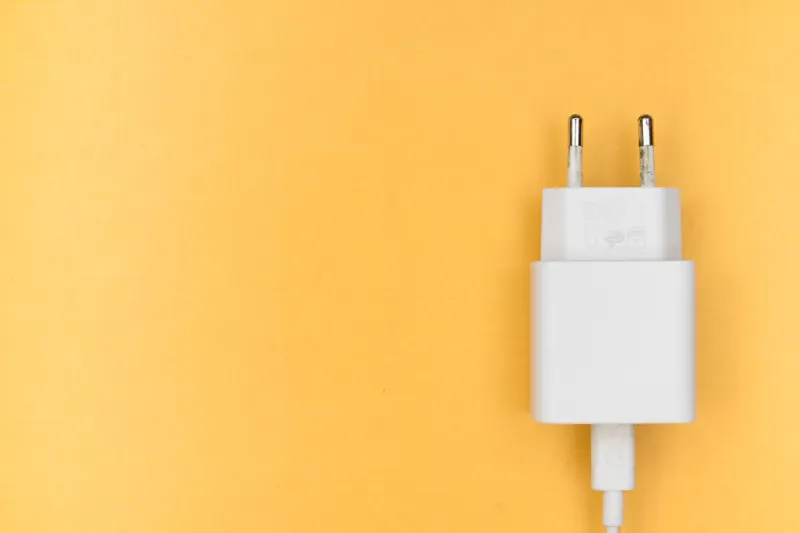
Chargers and power adapters deserve a regular look. Cheap USB-C bricks, travel adapters and unbranded fast chargers are common kitchen-drawer residents, and they are also the sort of thing that gets swapped between devices without a second thought. Check the model number, not just the wattage. A 65W charger is not a generic category. It is a specific product with a specific plug, circuit and safety history.
E-bike batteries are another category where a quiet withdrawal matters. Conversion kits, unbranded replacement packs and second-hand batteries can be harder to trace than a branded laptop. If you have one, check the pack label and any serial number, follow the manufacturer’s charging advice, and do not charge it unattended or overnight in a hallway. Your local fire and rescue service may also publish e-bike battery guidance. This is not about scaremongering. It is about treating a high-energy pack with the same respect you would give a gas boiler.
Smart plugs are the third. They are small, cheap and often bought in multi-packs, which makes it easy to forget which one is which. A faulty plug can overheat or switch unpredictably, and an app-based product can feel more complicated than it needs to be. If a model is subject to a safety notice, stop using it even if the app still works. Smart features are not a substitute for a safe plug.
Register it, even if it feels old-fashioned
Registering a purchase with the manufacturer is still one of the simplest ways to hear about a recall. It is not glamorous, and not every brand makes it easy, but it gives the company a way to contact you. Keep the receipt or order email. If the item was a gift, register it yourself. If it was second-hand, you may not be able to register, which is exactly why the label check matters.
For larger domestic appliances, schemes such as Register My Appliance can help, but many smaller gadgets fall outside those systems. The fallback is a simple note on your phone: product name, model number, purchase date and retailer. That note is your recall insurance.
If the recalled item is already in daily use
Stop using it. Unplug it. Do not keep charging it while you work out what to do next. Follow the action in the notice, whether that is a refund, a replacement, a repair or a return. Contact the retailer first if it still exists, then the manufacturer. If neither is helpful, the OPSS notice should tell you what the safety issue is and what action is expected.
Do not put a lithium battery in the bin. Take it to a council recycling centre or a retailer that accepts battery returns. Keep a photo of the model label and your receipt in case you need to prove which product you had. If the item has caused damage or injury, report it to Trading Standards through Citizens Advice. The system works better when it knows what happened after the notice went up.
A recall does not usually knock on the door. It appears on a page, in a database, or in a retailer’s support section, and then it waits. The label under the plug is your side of the bargain. Check it once in a while, and the gadget in your home is less likely to be a secret the notice desk already knows about.