Patched While You Slept: A UK Owner's Guide to Cars That Fix Themselves
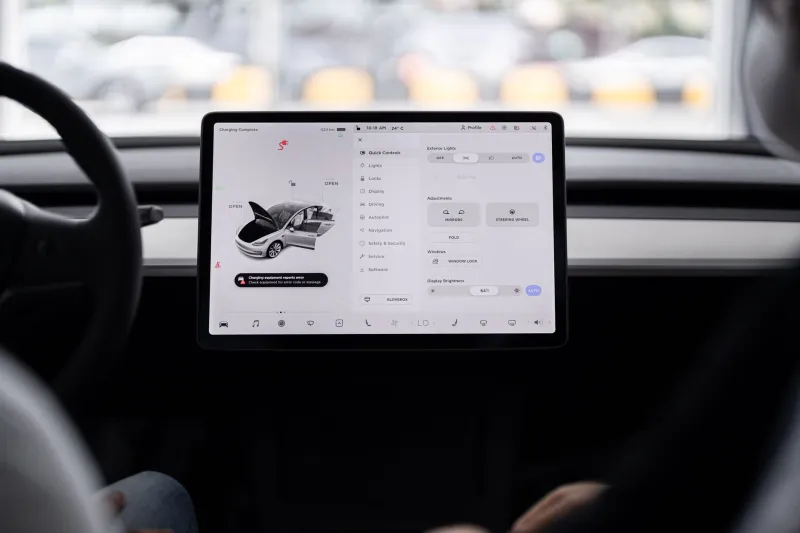
You park up on a Tuesday night. By Wednesday morning the car has learned a new trick, forgotten an old one, or gained twenty miles of indicated range. No letter through the door. No invoice. No courtesy car, no stale coffee in a dealership waiting area. Just a notification on the infotainment screen that says something like "Software 4.2.1 installed successfully" and a faint sense that you've been edited.
This is the quiet reality of the modern car. The over-the-air update has moved from novelty to housekeeping — and in some cases, from housekeeping to safety recall. Which is excellent news for anyone who'd rather not lose a Saturday to a service desk. It's also a genuinely new kind of consumer relationship, and most UK owners haven't been given the vocabulary for it.
Three different things arrive in the same wrapper
Manufacturers are not always helpful about this, but there are roughly three flavours of download, and they carry very different weight.
A feature update adds or changes something — a new menu layout, a tweak to the driver assistance screen, a media app. Cosmetic to mildly useful. Usually fine.
A service campaign is a fix the manufacturer thinks is worth doing but hasn't been classed as a safety recall. Still worth reading properly.
A safety recall is the serious one. In the UK, safety recalls are administered by the Driver and Vehicle Standards Agency (DVSA), and manufacturers are obliged to contact registered keepers by post — even where the remedy is delivered remotely. So if your car quietly patches itself and no letter ever appears, that's a question worth asking rather than a bonus.
Since the UN's software update regulation (known as R156) started applying to new type approvals, cars have had to be built around a formal software update management system. In plain English: the manufacturer is supposed to know which software version is on which car, and to be able to prove the update is safe and traceable. That paperwork exists. You're allowed to benefit from it.
The recall check that takes ninety seconds
Open the government's recall checker, type in your registration, and see what comes back. Do it now, before you finish this article. Then do it again after any update that mentions safety systems, and again before you sell the car.
If the checker shows a recall but your car has already had the fix applied over the air, you want the record to reflect that — not just for your own peace of mind, but because an unresolved recall flag on a used car is a haggling tool in someone else's hands. Ask the manufacturer's customer service line to confirm, in writing, that the remedy has been completed and the vehicle is marked as closed. Email counts.
While you're at it, check that the address on your V5C is current. A recall letter sent to a previous owner's flat in a different city helps nobody.
Read the notes like a sceptic, not a fan
Update notes are written by people who would rather you didn't read them. Look for the soft words: "improvements to system stability", "optimised thermal management", "refined charging behaviour". Those phrases can hide a meaningful change to how far the car goes, how fast it charges, or how much of the battery buffer you're allowed to use.
Four questions are worth asking every time:
- Does this change the specification I paid for? Range, charge rate, power output, towing capacity, even the noise the car makes.
- Is this the remedy for a recall? If yes, there should be a reference number.
- Can it be reversed? Some updates can be rolled back at a dealership. Many cannot.
- Does it need to happen while parked and plugged in? If the car wants several hours and a decent state of charge, that's not an inconvenience — that's a hint the update touches something substantial.
When convenience starts to look like a contract change
Here's the tension nobody puts on a slide. The car you drove off the forecourt is not necessarily the car you'll own in three years. Software can add capability, but it can also trim it — and the legal ground underneath that shift is thinner than most people assume.
The Consumer Rights Act 2015 says goods must match their description, be of satisfactory quality and be fit for purpose. If a downloaded change materially reduces a headline feature you bought on, keeping a copy of the original spec sheet and the brochure PDF is not paranoia — it's evidence. Save them to a folder the day you buy the car. Screenshot the range and charge figures you were quoted.
Equally, not every change is a downgrade. Plenty of updates genuinely improve things, and manufacturers do have legitimate reasons to adjust battery management or thermal behaviour. The point isn't suspicion for its own sake. It's knowing which changes you'd accept and which you'd push back on, before you're tapping "Install now" at 11pm.
The data question nobody asks
A big update can reshuffle what the car collects and who receives it. Telematics, driving behaviour data, insurance-linked scoring, location history, voice assistant recordings — all of this can be switched on, expanded or quietly re-scoped in the small print.
After a substantial update, take five minutes in the settings menus. Look at privacy, data sharing and connected services. Under UK GDPR you should have clear information about what's collected and a lawful basis for it, and consent-based features should be genuinely optional. If a feature you never agreed to is now sharing data, you're entitled to ask why — and to switch it off.
Five times to book the dealer instead
Remote updates are brilliant for the boring stuff. They are not a substitute for a ramp and a trained technician in every case.
- Anything touching brakes, steering, airbags or seatbelt pretensioners. You want a physical inspection and a paper trail.
- Driver assistance camera and radar calibration. Windscreen replacement, suspension work, even a knock can put the sensors out — no download fixes geometry.
- The update has failed, stalled, or the car is throwing warnings. A half-written module is a recovery job, not a DIY one.
- You're still inside the warranty and something feels off. Get it logged at a franchised dealer so the fault exists on record before the warranty conversation gets interesting.
- You're about to sell or part-exchange. A stamped-up software and recall history is worth real money at resale, and buyers are starting to ask for it.
A short pre-install checklist
- Recall checker run? Registration and V5C address correct?
- Update notes read in full, including the bits you'd normally skip?
- Car parked somewhere it can sit undisturbed, with enough charge?
- Spec sheet, original range and charge figures saved somewhere safe?
- Privacy and data-sharing settings reviewed after install?
- Any change to range, charging or power noted in a note on your phone, with the date?
None of this takes long. But it turns a silent overnight patch into something you actually understand — and that's the difference between a car that improves itself and a car that quietly becomes someone else's idea of what you bought.
Convenience is fine. Just make it visible.